Quick Care Checklist
- Offer several short play sessions that imitate stalking, chasing, catching, and resting.
- Rotate safe toys and keep string, ribbon, and small swallowable objects put away after play.
- Add vertical space, hiding places, scratching surfaces, and windows or other safe visual enrichment.
- Use food puzzles or scatter feeding only with part of the daily food allowance.
- Adjust jumping and play for age, body condition, arthritis, and any veterinary restriction.
Play like a small predator
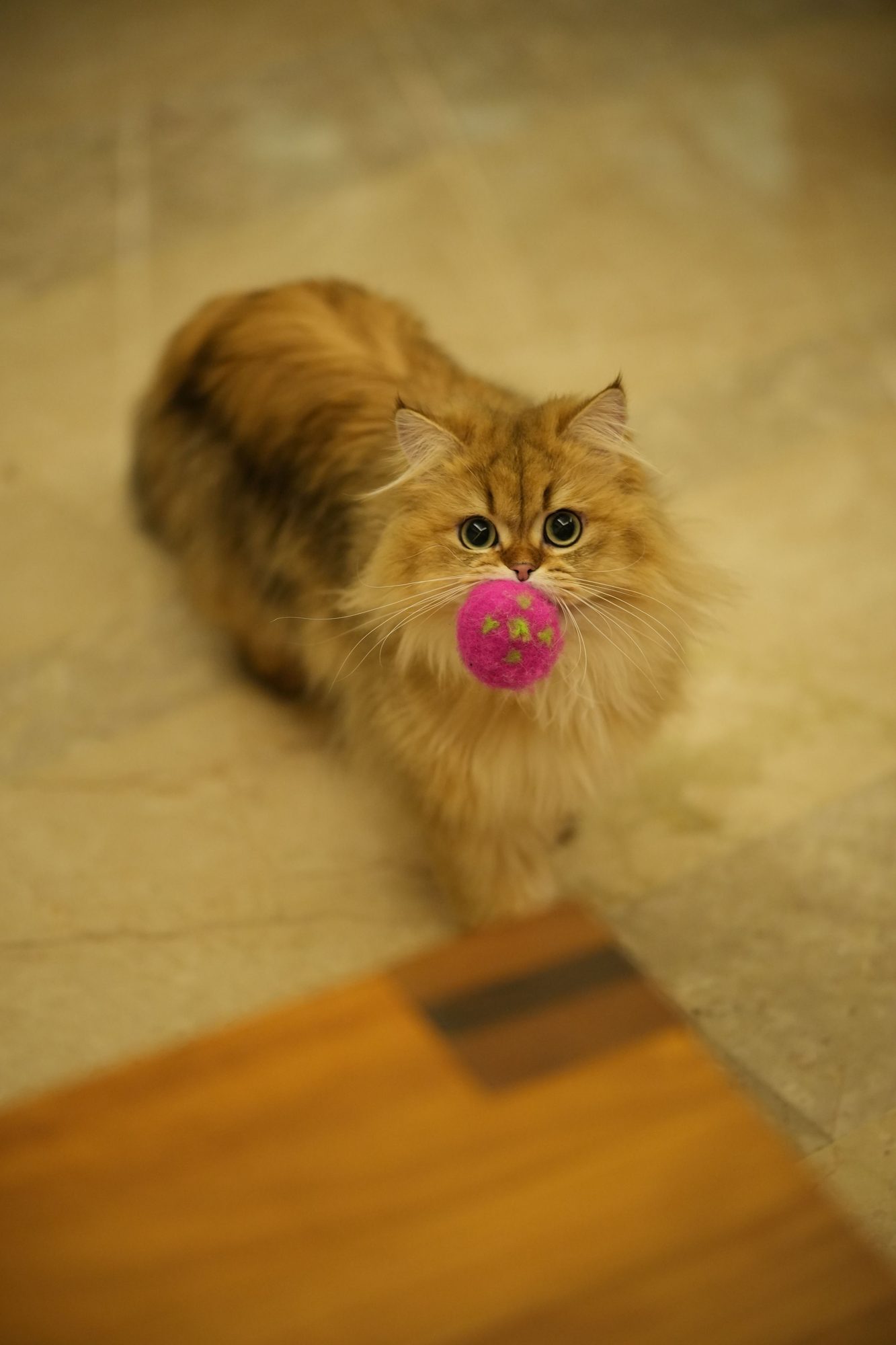
Most cats respond to movement that starts slowly, pauses, and then darts away. A wand toy, paper toy, tunnel, or light object can create a short hunting sequence. Let the cat catch the toy sometimes, then end with a calm reward or meal. Do not use hands or feet as toys.
Some cats prefer ground prey, some prefer height, and some prefer chasing food. Offer choices instead of assuming one toy will work.
Build an indoor activity circuit
Place scratching posts, resting shelves, boxes, tunnels, and toys in different areas. A stable vertical surface should allow a full stretch. Keep escape routes open in multi-cat homes so one cat cannot trap another.
Food puzzles and foraging can make meals more interesting, but start easy and check that every cat still eats enough.
A realistic daily rhythm
- Morning: a short play session before or around breakfast.
- Daytime: rest, window watching, puzzle feeding, and access to safe spaces.
- Evening: one or two interactive play sessions, especially for indoor cats that become active at night.
- Weekly: rotate toys, check scratching posts, and remove damaged items.
Short sessions that end while your cat is still interested are easier to repeat than one exhausting session.
When play changes
A cat that suddenly stops jumping, hides during play, becomes irritable, or tires quickly may be in pain or unwell. Older cats can still benefit from play, but use floor-level toys, ramps, and slower movement when joints are stiff.
When to Contact a Veterinarian
Contact a veterinarian for sudden exercise intolerance, limping, open-mouth breathing, collapse, repeated coughing, marked lethargy, or a major change in play and movement. Do not force exercise in a painful or overweight cat.
FAQ
How long should I play with my cat?
Several short sessions are a useful starting point. Stop when the cat is tired, frustrated, or overstimulated, and adjust to the individual cat.
Are laser pointers safe?
They can be frustrating if the cat never catches anything. If you use one, finish by directing the cat to a tangible toy or treat, and never shine it into the eyes.
Do indoor cats need exercise?
Yes. Indoor cats still need movement, play, foraging, scratching, and safe opportunities to climb or observe.
Sources
These references informed this general-education guide. Your veterinarian can adapt the advice to your pet's species, age, health, and living conditions.
Content note
This guide is for general education. It does not represent a veterinary review or replace advice for your pet's individual situation.