Quick Care Checklist
- Keep good-quality hay or grass available at all times, with clean water and a measured amount of pellets.
- Provide daily exercise, hiding places, safe chewing, and companionship from a compatible rabbit when possible.
- Rabbit-proof wires, toxic plants, gaps, and household products before allowing free exercise.
- Check eating, drinking, droppings, posture, breathing, coat, eyes, teeth, and movement every day.
- Arrange veterinary care for reduced appetite or fewer droppings instead of waiting for a routine appointment.
Diet first
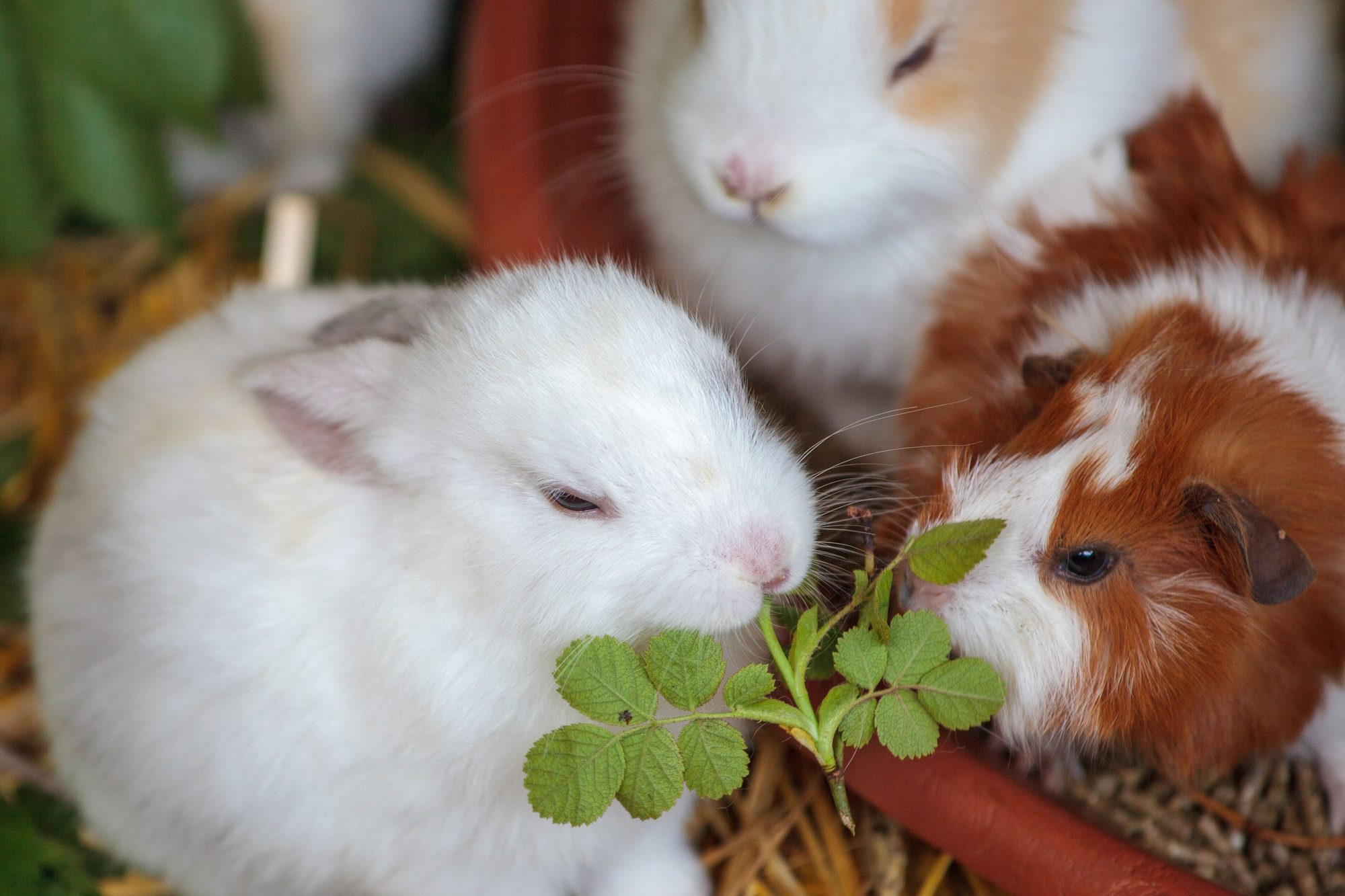
Hay or fresh grass should make up most of a rabbit's diet and should be available continuously. It supplies fiber for the digestive system and helps wear down continuously growing teeth. Leafy greens can be offered daily in variety and introduced gradually. Pellets should be measured and chosen for rabbits; fruit and root vegetables such as carrot are occasional treats.
Avoid sudden diet changes and avoid lawnmower clippings. If a rabbit refuses hay, ask a veterinarian to check for dental pain or another illness.
Space, exercise, and company
Rabbits need enough space to run, stretch, stand, hide, rest, and choose whether to be near a companion. A secure exercise area and a rabbit-proofed room can work indoors. Provide more hiding spaces than rabbits, with safe chewable enrichment and a dry sheltered area.
Rabbits are social animals. Bonding must be gradual and supervised; do not put unfamiliar rabbits together and assume they will sort it out.
Daily health observation
Rabbits often hide illness. Check that your rabbit is eating hay, drinking, and producing normal droppings. A quiet rabbit that is not eating, has fewer or no droppings, sits hunched, grinds teeth, or breathes differently may be in pain. Daily observation is more useful than trying to diagnose a disease from a single sign.
Grooming and home safety
Brush as needed for the coat and during heavy shedding, keep the living area dry, and check feet for sores. Secure electrical wires and remove toxic plants. Do not give human or another species' medicine. Rabbits chew, so every object within reach must be safe to chew or impossible to access.
When to Contact a Veterinarian
Contact a rabbit-experienced veterinarian immediately if your rabbit stops eating, produces fewer or no droppings, is very quiet or limp, has difficulty breathing, shows severe pain, or develops a swollen abdomen. Rabbits can become critically ill quickly.
FAQ
What should a rabbit eat most?
Good-quality hay and grass should be the main part of the diet, with leafy greens, measured rabbit pellets, and limited treats.
Can rabbits live alone?
Rabbits generally benefit from compatible rabbit companionship, but introductions must be planned and supervised. Ask a rescue or rabbit veterinarian for bonding guidance.
Is a rabbit quiet because it is relaxed?
Sometimes, but unusual quietness can mean pain or illness. Compare the rabbit with its normal eating, movement, and droppings.
Sources
These references informed this general-education guide. Your veterinarian can adapt the advice to your pet's species, age, health, and living conditions.
Content note
This guide is for general education. It does not represent a veterinary review or replace advice for your pet's individual situation.